The tool moment
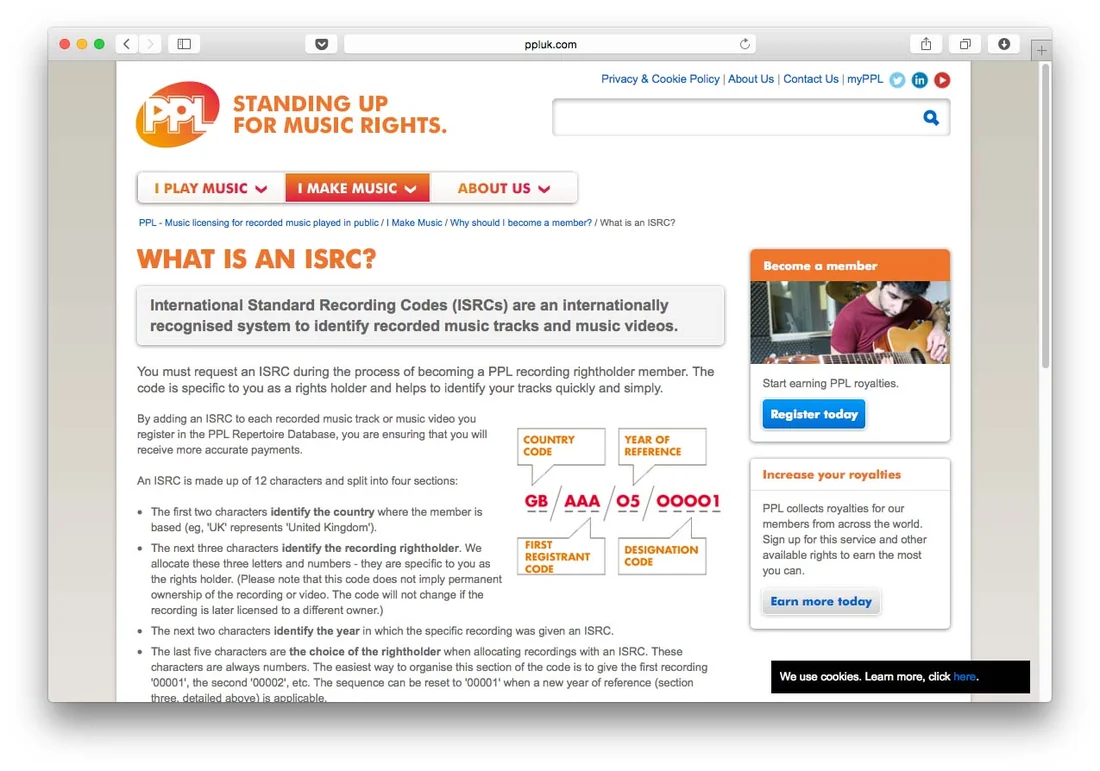
The International Standard Recording Code, or ISRC, is a twelve-character identifier assigned to a specific sound or music video recording, administered in the United States by the US ISRC Agency and internationally by the International ISRC Agency at IFPI. The international agency's own documentation describes the code's structure as a five-character prefix allocated by an ISRC agency, a two-digit year of reference showing when the code was assigned, and a five-digit designation number chosen by the registrant. A self-releasing artist can assign a code directly, a label can obtain its own prefix for its catalog, and a platform can register as an ISRC manager on behalf of others. The code exists so a specific recorded version of a track, as opposed to the composition itself, can be traced through a remix or a stem pulled from it back to the exact recording it came from.
What the documents show
Both agencies' pages describe the ISRC narrowly. The US ISRC Agency states a completed code is, in its own phrase, a 'dumb' number, since it simply identifies the recording, language undercutting any reading of the code as certifying anything beyond identity. The international agency is explicit that the code applies to recordings and videos only: it states directly that 'ISRC is not used to identify compositions/musical works, music products or performers.' Neither document claims the code establishes who owns the recording, who performed on it, or who holds the copyright; it only claims the code permanently and uniquely points to one recorded version.
What stays with the musician
Assigning an ISRC to a stem, a remix, or a reissue does not settle who owns it. An engineer separating a legacy multitrack, or a producer releasing a remix built on an old recording, still has to establish the underlying rights separately from whatever ISRC gets attached at distribution. The code tracks royalties back to the right recording once rights are settled; it does nothing to settle a dispute over who controls those rights, and neither agency claims otherwise.
Judge it by listening
An ISRC is not something a listener can hear, and neither agency frames it as a quality or authenticity signal. This is editorial guidance beyond the sources: when a track or stem carries an ISRC, that only confirms it has been catalogued as one specific recording for royalty purposes. It says nothing about whether the recording was produced, mixed, or separated the way a listener assumes, so any claim about how a track was made still has to be checked against a documented source, not the presence of an identifier.
- Does this ISRC identify the specific version I am hearing, or an earlier mix or edit of the same recording?
- Who assigned this code, and does that party also claim to own the rights to the recording?
- Am I treating the ISRC as proof of ownership, when the standard's own documentation says it identifies a recording only?
An ISRC is a precise address for a recording, not a verdict on who is allowed to use it, and the standard's own administering agencies are explicit about that limit.
Sources & reading trail
States that an ISRC is a permanent identifier for a specific recording and describes it as a plain identifying number.
Source published: Not established · Retrieved: 16 September 2026
Gives the code's structure and states explicitly that an ISRC identifies sound recordings and music videos, not compositions or performers.
Source published: Not established · Retrieved: 16 September 2026
Documentation, papers and the makers' own records establish the note; the judgment about what stays with the musician is Mix & Meaning editorial analysis. This retrospective draft does not imply the site published on the event date.