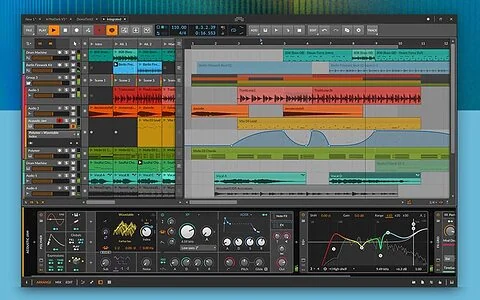
The tool moment
Bitwig Studio, the company's first product, launched in 2014, five years after Bitwig itself was founded. Bitwig's own About Us page states the company was founded in 2009 in Berlin by four people who envisioned a digital-audio workstation that is reliable, innovative, and that makes helpful suggestions, and that this was the idea behind the launch of its first product in 2014, Bitwig Studio. An earlier, pre-launch snapshot of the same page from 2011 describes the still-unreleased company as founded in 2009 by a team with extensive experience in the music-technology industry, without naming a previous employer.
What the documents show
The current About Us page is a living company-history statement, revised many times since 2014, while the 2011 snapshot captures the company's own words from before Bitwig Studio existed at all — both are Bitwig's own self-description, not independent reporting, and neither names the music-technology experience more specifically than that phrase. Bitwig's own page for The Grid states that modularity has been at the core of Bitwig Studio from the beginning, while treating The Grid itself as the next logical step that came later — the company's own words draw the line between the 1.0-era design principle and a device family that arrived afterward, without this page giving that later date.
What stays with the musician
A clip-based, modular workflow adds routing and patching options, but Bitwig's own description of The Grid frames it as a sound-design environment the musician builds inside, not one that composes on their behalf: simply add a Grid device to a project and start patching. The patching, and whatever arrangement eventually comes from it, remains the user's own construction, whether it happens inside Bitwig Studio's original clip launcher or its later modular devices.
Judge it by listening
Nothing in Bitwig's own materials here documents a listening test for either the 2014 launch or The Grid, so no sound-quality claim is being made or checked. What a reader comparing a clip-based, modular DAW like Bitwig to alternatives can check, editorially, is whether an exported track preserves the modular routing the musician actually built, or collapses it into a fixed audio result that hides those patching decisions from anyone who opens the project later.
- Does a claim about Bitwig's founders' prior experience come from Bitwig's own materials, or is it an assumption filled in elsewhere?
- Is a feature described as part of the original 2014 release, or does it belong to a later addition such as The Grid?
- When a project is exported or shared, are the modular routing choices a musician made preserved, or only their audible result?
Bitwig took five years from founding to first shipping product, a gap its own materials describe but do not explain in detail. That patience, whatever produced it, is part of the same company record that later frames The Grid as a deliberate next step rather than a rushed addition.
Sources & reading trail
Bitwig's current about page states the company was founded in 2009 in Berlin and launched its first product, Bitwig Studio, in 2014.
Source published: Not established · Retrieved: 16 September 2026
A pre-launch archived snapshot of Bitwig's own about page describes the 2009-founded team's background in the music-technology industry before Bitwig Studio existed.
Source published: Not established · Retrieved: 16 September 2026
Bitwig's own page states modularity was core to Bitwig Studio from the beginning, while describing The Grid as a later, separate addition.
Source published: Not established · Retrieved: 16 September 2026
Documentation, papers and the makers' own records establish the note; the judgment about what stays with the musician is Mix & Meaning editorial analysis. This retrospective draft does not imply the site published on the event date.