The tool moment
On 6 March 2015, Hooktheory announced a significant expansion to Hookpad, its browser-based songwriting tool: an instrument library, a mixing panel, improved MIDI export with a separate track for every instrument, WAV export, and the ability to save projects locally. The company's own post frames the update against what the tool already did, stating that Hookpad “has always simplified songwriting by helping you choose chords that sound good together and guiding you to write a good melody.” The March 2015 release turned that chord-and-melody sketch into something a songwriter could arrange with named instruments and carry into a separate production.
What the documents show
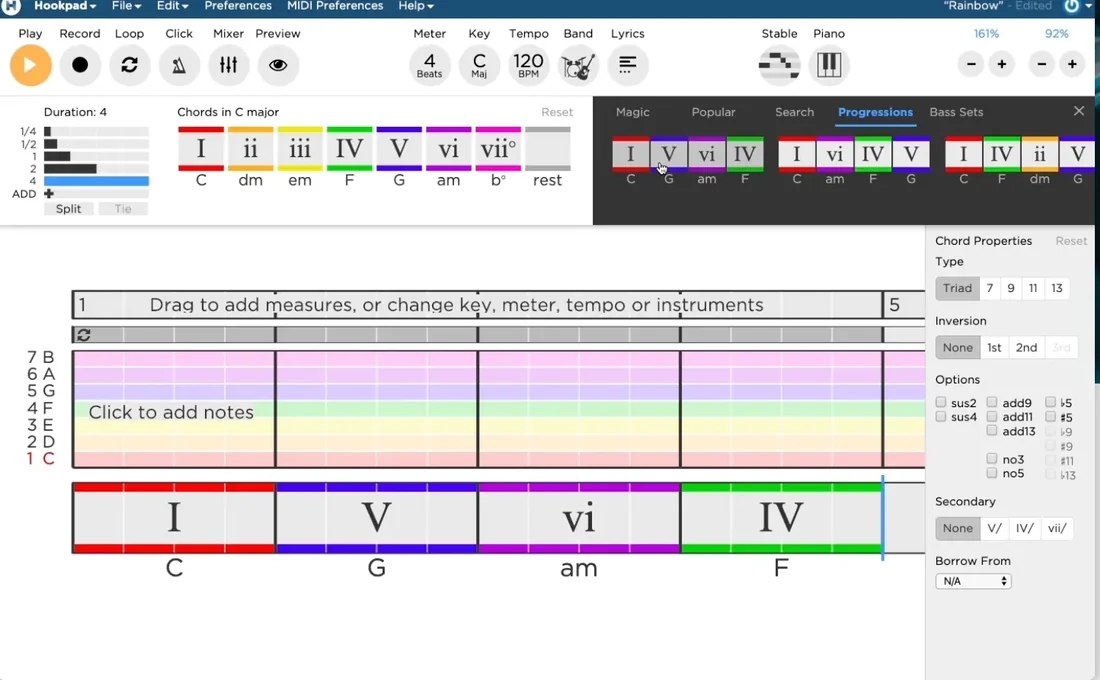
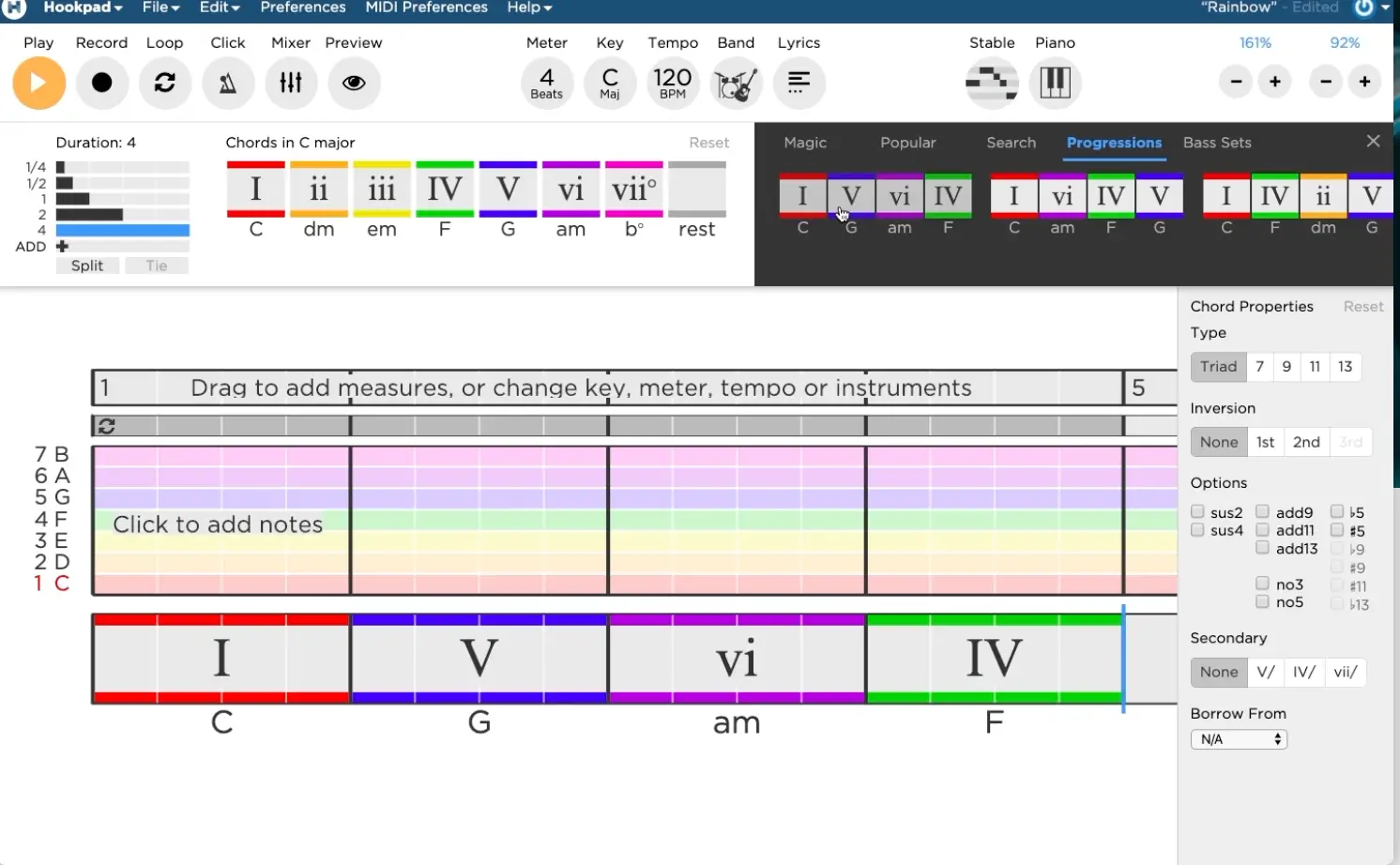
Hooktheory's own product page, live months before the update, describes Hookpad's core mechanic: a chord palette that “groups the chords that work well together in a particular key,” letting a songwriter build a progression in a few clicks and hear it played back at any tempo. The March 2015 post adds that the new instrument library let a user swap in an EDM bass, a synth pad or a violin section and adjust each part's range and volume before export. Hooktheory's current site separately describes TheoryTab as “the internet's largest database of songs broken down by music theory,” the annotated repertoire of existing songs that Hookpad draws on for chord suggestions; that description reflects the site as retrieved on 16 September 2026, and the database itself catalogues other artists' recordings rather than material original to Hooktheory.
What stays with the musician
Hookpad's palette narrows a key's chords to ones that will not clash and offers instrument sounds to sketch an arrangement, but it does not choose which progression tells the intended story, which voicing belongs in a finished mix, or when a borrowed progression pattern needs enough reworking to read as an original composition rather than a copy of an annotated song in the TheoryTab database. Those judgments, and any clearance question a closely modeled progression might raise, remain the songwriter's.
Judge it by listening
Hooktheory's posts describe what the palette and instrument library do; they make no claim about the musical quality of any song built with them. A reader can listen for whether a Hookpad sketch's exported instrument parts still sound purposeful once moved into a full production, or whether the chord choices lean so heavily on the tool's most common suggestion that the progression sounds interchangeable with others built the same way. This is an editorial listening check, not a method Hooktheory documents itself.
- Does the chosen progression serve the song's own idea, or does it default to the palette's most common suggestion?
- Do the exported instrument parts still make sense once moved into a full arrangement outside Hookpad?
- Is a progression close enough to an annotated TheoryTab song to warrant a harder look before release?
The March 2015 update did not change how Hookpad picks chords; it changed what a songwriter could do with the result, turning a theory-guided sketch into an arrangement with instrument parts ready for a separate production.
Sources & reading trail
Hooktheory's own dated blog post describes the March 2015 addition of an instrument library, mixing controls, and MIDI/WAV export, and states Hookpad has always helped a user choose chords and write a melody.
Source published: 6 March 2015 · Retrieved: 16 September 2026
Hooktheory's own product page describes Hookpad's chord palette, which groups chords that work well together in a chosen key so a songwriter can build a progression in a few clicks.
Source published: Not established · Retrieved: 16 September 2026
Hooktheory's current site describes TheoryTab as a large database of annotated songs that backs Hookpad's chord suggestions; reflects the site as retrieved 16 September 2026, not the tool's 2015 state.
Source published: Not established · Retrieved: 16 September 2026
Documentation, papers and the makers' own records establish the note; the judgment about what stays with the musician is Mix & Meaning editorial analysis. This retrospective draft does not imply the site published on the event date.