The tool moment
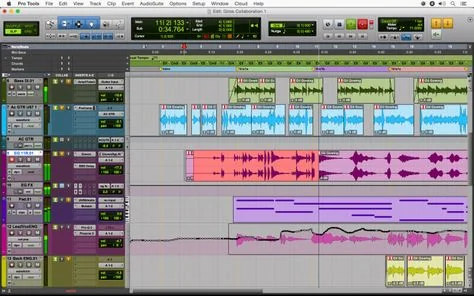
Digidesign's own company materials date Pro Tools' introduction to 1991, the year the company turned a Macintosh into a full multitrack recorder and editor. Digidesign's mid-1990s company page states that more than 15,000 Pro Tools systems had shipped since the product's 1991 debut, and lists its feature set as recording, editing, mixing, signal processing, and automation — the vocabulary of a computer-based session rather than a tape one. Before Pro Tools, Digidesign sold Sound Tools, a two-channel disk-based editing system for the Macintosh. Pro Tools extended that lineage into true multitrack recording, letting a musician track, arrange, and mix several parts on a general-purpose computer instead of a reel of tape.
What the documents show
The Digidesign page is a company self-description, not an independent audit: its sales figure is a vendor's own claim, offered without methodology, and the page is a marketing overview rather than a spec sheet for the 1991 model specifically. A companion Sound Tools II product page describes the earlier Sound Tools as the company's stereo, disk-based editing product and calls its own successor the next step in that evolution. Neither document mentions the plug-in hosting architecture Digidesign introduced later; nothing here should be read as crediting the original 1991 Pro Tools with plug-in support.
What stays with the musician
A hard-disk recorder changes the medium, not the judgment. Digidesign's own list of Pro Tools' capabilities — recording, editing, mixing, signal processing, automation — describes a toolset for capturing and rearranging a performance, not a system that decides what a good take, balance, or arrangement sounds like. Any modern session tracing its file format to this lineage, including the stems producers now hand to AI-assisted mixing tools, still carries the same division of labor: the software preserves what was performed, and a person still decides what to keep and how the parts sit together.
Judge it by listening
Because Pro Tools' 1991 debut predates any AI mixing feature by decades, there is no vendor listening claim to test here. What a reader can evaluate today, editorially, is continuity: when a tool advertises Pro-Tools-session compatibility, check whether it preserves the track count, edits, and gain structure a human engineer set, rather than collapsing them into a mix the tool has already decided is finished. That is the practical descendant of the distinction Digidesign's own pages draw between a system and the features it lists — the system records and enables; a person edits and finishes.
- Does a Pro-Tools-compatible session import preserve every original track, or does it flatten choices the engineer made?
- Is a vendor's own historical sales or adoption figure independently verified, or only a company claim?
- Does a tool add processing, such as plug-in hosting, that the era it claims descent from did not actually have?
Pro Tools' first years show hard-disk recording and AI-assisted mixing solving different problems in different eras. The 1991 system gave a musician a flexible recorder; it did not tell them what to record. That distinction is worth keeping in mind whenever marketing leans on Pro Tools' pedigree without saying which era it descends from.
Sources & reading trail
Digidesign's own company page states more than 15,000 Pro Tools systems had sold since the product's introduction in 1991.
Source published: Not established · Retrieved: 16 September 2026
Digidesign's own product page describes Sound Tools II as the successor to its stereo disk-based Sound Tools system, the product line Pro Tools grew out of.
Source published: Not established · Retrieved: 16 September 2026
Documentation, papers and the makers' own records establish the note; the judgment about what stays with the musician is Mix & Meaning editorial analysis. This retrospective draft does not imply the site published on the event date.