The tool moment
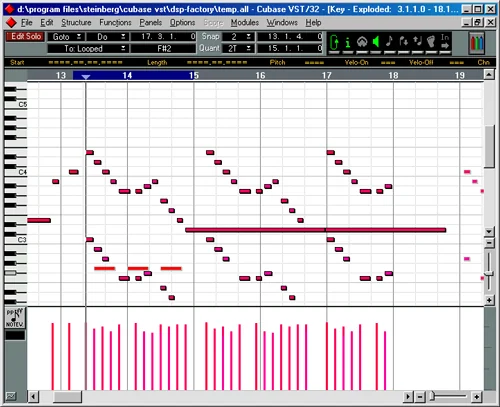
Steinberg's own company history page dates Cubase 1.0's arrival to 1989, describing it as significantly more powerful than its predecessors, with new technologies allowing a drastically improved graphical display for musical information. Those predecessors were Pro-16 and Pro-24, MIDI sequencers Steinberg had built for the Atari ST, a computer the same page credits with offering both a graphical user interface and a built-in MIDI interface at a time when that combination was new. Cubase 1.0 continued that lineage: it sequenced MIDI data — timing, pitch, velocity, and instrument-selection messages sent to external synthesizers and drum machines — rather than recording audio.
What the documents show
The same Steinberg page is explicit about when audio recording actually arrived: two years later, in 1991, Cubase Audio is described as a new milestone in which audio data could now be recorded directly into the computer, language that only makes sense set against a 1989 version that could not do that. An independent account from the MIDI Association, describing the era's competing Atari sequencer C-Lab Creator, notes that Cubase's arrange window and track-based editing arrived after Creator and were shaped partly in response to it — a reminder that Cubase launched into an already competitive market. Steinberg's own page, naturally, frames its product's arrival as the more significant event.
What stays with the musician
A MIDI sequencer, however improved its graphical display, only ever plays back instructions a musician entered — which note, how hard it was struck, how long it rings, and which instrument receives it. Cubase 1.0's contribution, per Steinberg's own account, was making those instructions easier to see and edit, not making decisions for the person editing them. Every arrangement choice that mattered in 1989 — which patch to assign a channel, how to structure a song, when a part should drop out — remained outside the software's job description, exactly as it does in any sequencer built since.
Judge it by listening
Because Cubase 1.0 sequenced MIDI rather than recording audio, its sound was entirely a function of whatever external synthesizers it addressed; the software produced no audio, favorable or otherwise, of its own. A useful exercise when researching this era is comparing an Atari-era MIDI arrangement played back through its original external sound sources against the same file rendered through a modern software synthesizer: any audible difference belongs to the instruments, not the sequencer that arranged the notes. That distinction, easy to lose once 'DAW' came to mean an all-in-one environment, is worth holding onto when evaluating a claim about a sequencer's own sound.
- Is a described 'Cubase sound' actually coming from the sequencer, or from the synthesizer modules it was driving?
- When a history page says a product 'arrived,' does it mean announced, shipped, or reached general availability?
- What did the immediate prior version of this tool do differently, according to the vendor's own account?
Steinberg's own materials are unusually specific about the boundary between Cubase's 1989 MIDI-only debut and its 1991 addition of audio recording, a distinction worth preserving whenever 'Cubase' is used as shorthand for a single, unchanging piece of software.
Sources & reading trail
States Cubase 1.0's 1989 arrival as a MIDI-only successor to Pro-24, and that audio recording was added later, in 1991, with Cubase Audio.
Source published: Not established · Retrieved: 16 September 2026
Independent account of the Atari ST-era MIDI sequencer market Cubase emerged into, noting Cubase's arrange window arrived after C-Lab's Creator.
Source published: Not established · Retrieved: 16 September 2026
Documentation, papers and the makers' own records establish the note; the judgment about what stays with the musician is Mix & Meaning editorial analysis. This retrospective draft does not imply the site published on the event date.