The tool moment
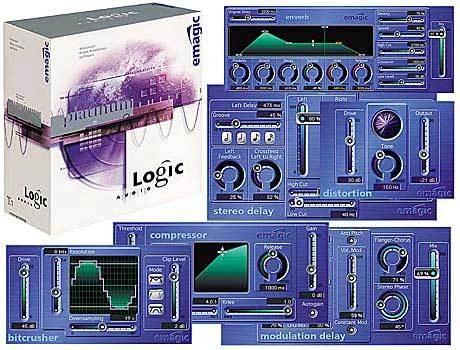
Emagic was founded in September 1992 in Hamburg by Gerhard Lengeling, Chris Adam, and Sven Junge, and, in the company's own words, within a few months brought a new sequencer called Logic to market, describing it as the precursor to Logic Audio. That places the product's arrival in 1993, per Emagic's own company history page. The sequencer that later became Apple's Logic Pro, with its current AI-assisted stem-splitting and mastering features, traces its brand and lineage directly to this small, independent German launch.
What the documents show
Emagic's company page is a living about-us statement, not a dated 1993 press release, so it should be read as the company's own later account of its origin rather than a contemporaneous record; it gives a founding month but only within a few months for Logic's release, not an exact date. A separate, dated document, Apple's own press release of 1 July 2002, states plainly that Apple acquired Emagic and that Logic was actively used by over 200,000 musicians around the world at that time — Apple's own figure, not an independently audited count. Emagic's history page separately gives June 2002 for the same deal; the small date discrepancy between the two companies' own accounts is worth noting rather than silently resolving.
What stays with the musician
Neither document describes Logic's 1993 feature set in technical detail, but both confirm the product predates Apple's involvement by nearly a decade — a gap worth naming whenever a current version's marketing implies a shorter, more direct lineage. Whatever recording or arranging tools Logic offered at launch, the underlying decision of what a session's finished arrangement should be remained, as with any sequencer of that era, a task for the person at the keyboard, not the software.
Judge it by listening
Neither Emagic's history page nor Apple's acquisition release makes a claim about sound quality, so there is nothing from 1993 or 2002 to test by ear here. The practical, source-grounded check for a reader is historical rather than sonic: when a description of Logic Pro's current AI features reaches back to 1993 for pedigree, confirm whether it is naming the same company, which it is not after 2002, or the same continuously developed codebase, since these documents establish company history and market claims, not code continuity.
- Does a claim about Logic's history name the correct company for the period being described — Emagic before 2002, Apple after?
- Is a vendor's user-count figure, like Emagic's or Apple's, presented as the company's own claim rather than an independent measurement?
- When two companies' own documents give slightly different dates for the same event, has that discrepancy been flagged rather than picked silently?
Logic's 1993 debut and its 2002 change of ownership are two separate, documented events, almost a decade apart, and conflating them flattens a real transition in who built the software and why. Keeping the two eras distinct is a small discipline that keeps a much longer product history honest.
Sources & reading trail
Emagic's own company page states it was founded in September 1992 and brought Logic to market within a few months, and that Apple acquired Emagic in June 2002.
Source published: Not established · Retrieved: 16 September 2026
Apple's own press release confirms it acquired Emagic, dated 1 July 2002, and states Logic's user base as over 200,000 musicians at that time.
Source published: 1 July 2002 · Retrieved: 16 September 2026
Documentation, papers and the makers' own records establish the note; the judgment about what stays with the musician is Mix & Meaning editorial analysis. This retrospective draft does not imply the site published on the event date.