The tool moment
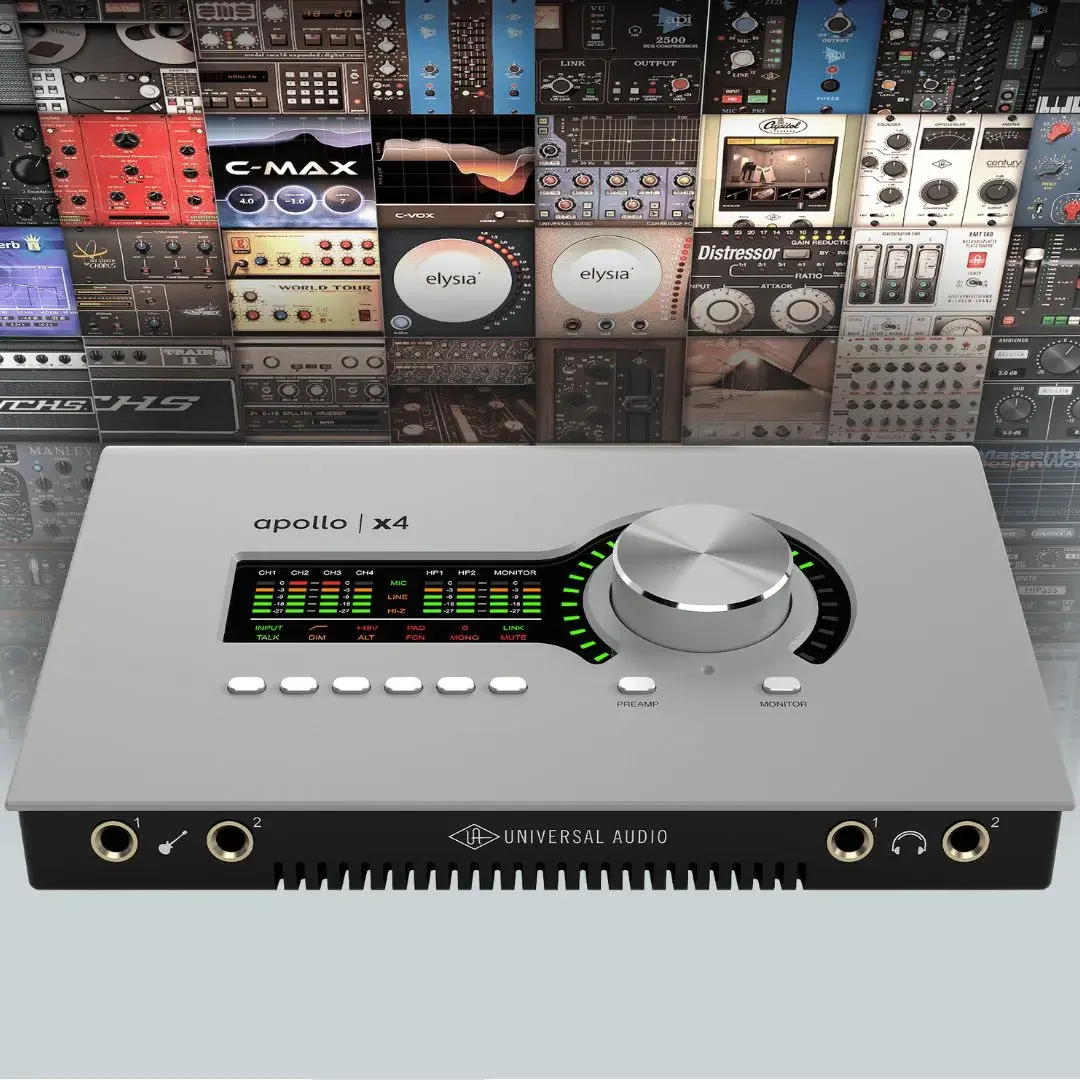
Universal Audio introduced Apollo in January 2012, describing it on the original product page as 'the first professional, high-resolution computer audio interface that delivers the sound, feel, and flow of analog recording.' The interface paired an 18x24 FireWire connection, with an optional add-in card for Thunderbolt, with onboard DSP that ran the company's UAD plugin emulations of classic hardware in real time. Before Apollo, a musician using UAD plugins processed audio after it was already recorded, or monitored through a separate analog chain while tracking; Apollo let an engineer print a Neve-style preamp emulation or a tape-machine model onto a take while performing it, moving a modeling decision that used to happen at mixdown into the moment of tracking itself.
What the documents show
The January 2012 page states the interface achieves 'sub-2ms' latency for tracking and mixing through UAD plugins, and its companion FAQ from the same launch window gives a specific figure: 'analog-to-analog latency at 96kHz comes in at 1.1 milliseconds' when recording through four stacked plugins. Both documents describe the original Apollo as 'FireWire/Thunderbolt-ready,' with Thunderbolt available only through a separately sold I/O card rather than as a built-in connection, a detail worth preserving since later Apollo models shipped with Thunderbolt as the primary connection and the two generations are easy to conflate in hindsight. These latency figures are Universal Audio's own measurements, published to support the product, not an independent lab test cited here.
What stays with the musician
Real-time UAD processing changes when a modeling decision gets made, not whether it should be made at all: choosing which preamp or compressor emulation suits a specific voice or instrument, and how hard to drive it, is still a mix decision, now moved earlier in the session. The FAQ's own emphasis on Console Recall, saving the full interface and plugin state within a DAW session, exists precisely because printing an analog-modeled sound while tracking is harder to undo than automation added later, which raises the stakes on getting that early decision right rather than removing the decision.
Judge it by listening
Because Apollo's own documents make a latency claim, not a sonic-accuracy claim, a useful, editorial listening check is comparing a take printed through a UAD emulation while tracking against the same take recorded dry and processed identically afterward, to hear whether committing early actually changed a performance decision, such as how a singer reacted to hearing compression while singing.
- Did printing the plugin while tracking change how the performance was played or sung, for better or worse?
- Is the chosen emulation suited to this specific source, or a default habit carried from another session?
- Was Console Recall used to preserve the option to revisit the setting later, in case the early decision needs revising?
Apollo's documented contribution was speed and immediacy: near-zero-latency access to modeled analog processing at the moment of performance. The judgment of which model to reach for, and how committed to be to a choice made that early, remained with the person behind the console.
Sources & reading trail
Original product page describing the FireWire/Thunderbolt-ready design, sub-2ms latency claim, and real-time UAD processing.
Source published: Not established · Retrieved: 16 September 2026
Company FAQ giving the specific 1.1 millisecond latency figure and describing Console Recall.
Source published: Not established · Retrieved: 16 September 2026
Documentation, papers and the makers' own records establish the note; the judgment about what stays with the musician is Mix & Meaning editorial analysis. This retrospective draft does not imply the site published on the event date.