The tool moment
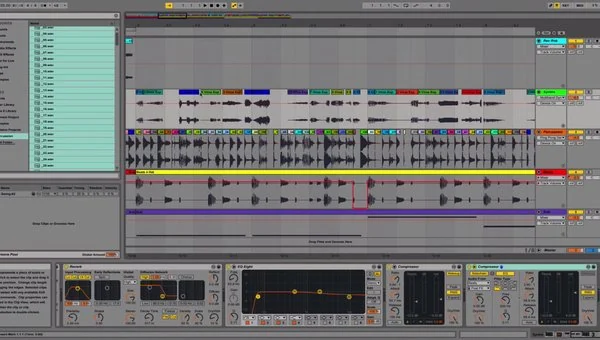
Ableton released Live 9 on 5 March 2013, the same day it shipped its first hardware instrument, Push, built jointly with Akai Professional. Per the company's own press release, Live 9's most important new features included real-time Session View automation recorded directly inside clips, with that automation able to move together with clips between Arrangement and Session View, a redesigned browser, three audio-to-MIDI conversion modes, reworked studio effects including a new Glue Compressor, and Max for Live bundled into the Suite edition for the first time.
What the documents show
The press release is Ableton's own list of headline features, not an independent review, and it is precise about edition-specific detail — Max for Live is named as a Suite-only addition, not a feature of every Live 9 copy. Ableton's separate, dated release-notes archive lists the 9.0 version itself only as an initial release, DVD only, with the detailed line-by-line changelog beginning at 9.0.1; together, the two documents distinguish what Ableton announced at launch from what its own dated technical log records version by version afterward.
What stays with the musician
Session automation lets a performer capture a knob move as they play, but the press release itself frames this as something recorded directly within clips that a musician then moves between Arrangement and Session View — the tool captures the gesture; where that gesture belongs in a finished arrangement is still a manual decision. Audio-to-MIDI extraction, similarly, produces raw MIDI data from a recording; deciding which notes to keep, quantize, or reassign to a different sound remains an edit the musician performs afterward.
Judge it by listening
Live 9's press release calls the new Glue Compressor an authentic model of a legendary 1980s console bus compressor — a vendor's own characterization, not an independently verified one. A reader can only test that claim by comparing the Glue Compressor's behavior against the hardware it is modeled on, using their own ears and a documented listening method, rather than accepting authentic as settled by the press release alone.
- Is a Live 9 feature being described as available in every edition, when the press release names it as Suite-only?
- Does a described automation feature still require the musician to decide where it belongs in the arrangement afterward?
- Has a vendor's authentic-model claim about an effect been checked against the original it is modeled on, or only assumed?
Live 9's changes moved automation and audio-to-MIDI conversion closer to the moment of performance, but the press release's own language keeps the arrangement step separate from the capture step. That separation is worth watching for in any later version's AI-assisted claims, since capturing a gesture and deciding what to do with it remain two different things.
Sources & reading trail
Ableton's own press release, dated Berlin 5 March 2013, lists Live 9's headline features including session automation, browser redesign, audio-to-MIDI, and reworked effects.
Source published: 5 March 2013 · Retrieved: 16 September 2026
Ableton's own dated release-notes archive lists Live 9.0 as an initial DVD-only release, with the detailed changelog beginning at version 9.0.1.
Source published: Not established · Retrieved: 16 September 2026
Documentation, papers and the makers' own records establish the note; the judgment about what stays with the musician is Mix & Meaning editorial analysis. This retrospective draft does not imply the site published on the event date.