The tool moment
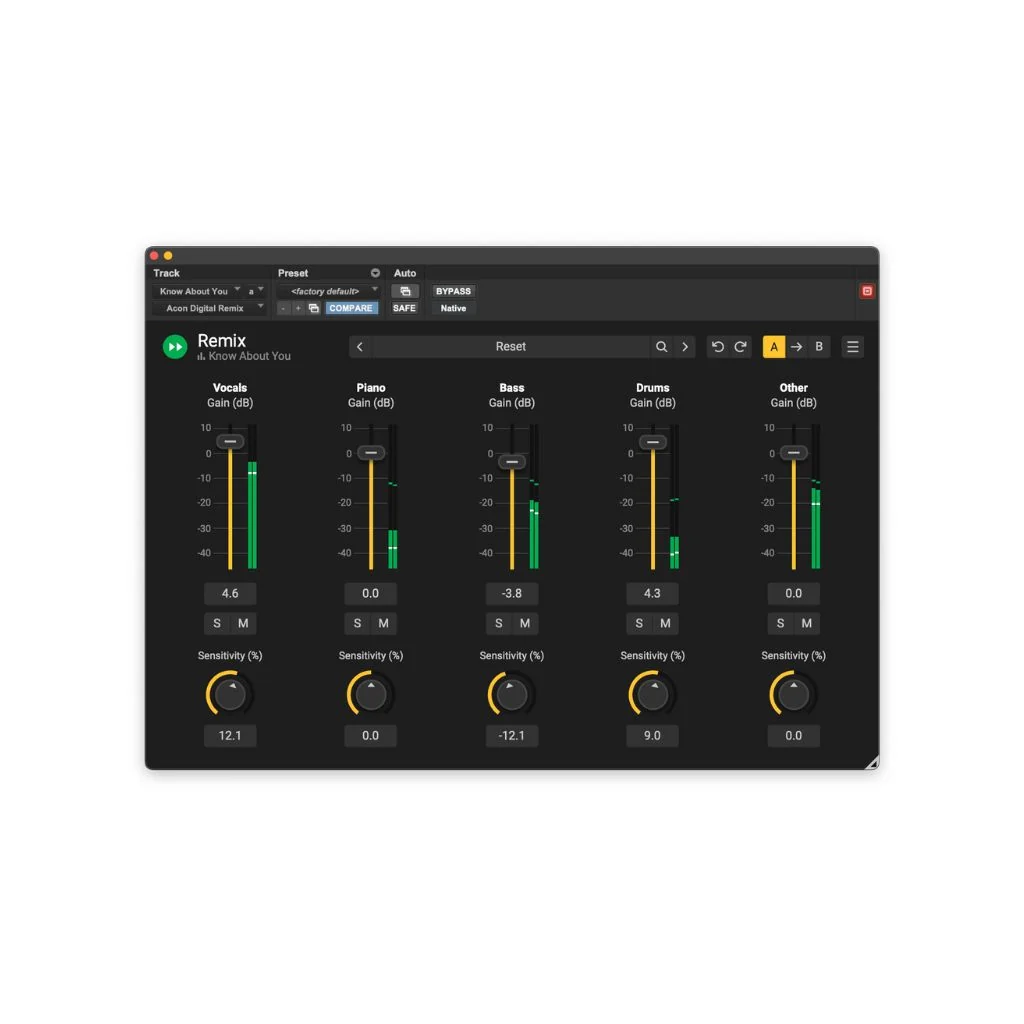
Acon Digital sells a plugin called Remix that splits a mixed track into five outputs in real time: vocals, piano, bass, drums, and everything else. The product page describes each stem as independently adjustable, with per-stem sensitivity controls, and lists formats covering VST, VST3, AAX, and AU across Logic Pro, Pro Tools, Ableton Live, Cubase, Nuendo, Reaper, FL Studio, and other hosts. The page prices the plugin at $49 as a one-time purchase, and states the separation is powered by, in the vendor's words, 'cutting-edge AI.' It does not state a release year or a changelog; the listing shows only version '1.x.' Because no dated announcement appears on Acon Digital's own site, this note treats Remix as a living product listing, describing what the vendor's materials say as retrieved 16 September 2026.
What the documents show
The 'cutting-edge AI' language is a marketing claim with no accuracy figures attached. A separate page, the company's AI development statement, goes further than most plugin vendors' sites in describing where the underlying models learn from: content the company created, licensed sound libraries used with permission, openly licensed audio, and synthetic audio built for a specific purpose. The company states it does not use audio for training 'unless we have clear, verifiable permission to do so,' and names Remix as a product improved using 'synthetic musical instrument audio using MIDI' rather than scraped recordings. That is a self-reported policy, not an audited one, but it is a documented commitment, more specific than most stem-separation vendors publish about training sources.
What stays with the musician
Remix does not decide what a remix or repair job should sound like. Splitting a mix into five stems only produces raw material; a musician still chooses which stem to feature, mute, or rebalance, and still has to judge whether separation bleed has changed what the drum or vocal output contains. Nothing in Acon Digital's materials addresses whether the musician has the right to remix the source recording in the first place; a plugin that can pull stems from a mix does not clear the rights to redistribute what comes out of it.
Judge it by listening
Acon Digital does not publish a signal-to-distortion score or a documented listening-test method, so a reader has no benchmark to check the marketing language against. This is editorial guidance beyond the sources: separating five simultaneous stems is harder than isolating one instrument, so listen at the edges of transients and dense passages, where residual bleed is most likely to surface, rather than trusting a word like 'cutting-edge.'
- Does the vendor state what its models were trained on, or only that the result sounds good?
- Are all five stems usable, or does one carry most of the separation artifacts?
- Do I have the right to remix or redistribute the source recording, separately from what the plugin can extract?
A stem splitter that documents its training sources is still not a rights-clearance tool, and a five-way split is raw material a musician has to shape into a finished remix.
Sources & reading trail
Describes Remix's five stem outputs, per-stem controls, supported plug-in formats, system requirements, and one-time price, with no stated release year.
Source published: Not established · Retrieved: 16 September 2026
States the company's training-data policy and names Remix as a product improved using synthetic MIDI-rendered instrument audio.
Source published: Not established · Retrieved: 16 September 2026
Documentation, papers and the makers' own records establish the note; the judgment about what stays with the musician is Mix & Meaning editorial analysis. This retrospective draft does not imply the site published on the event date.