The tool moment
Steinberg's own news archive dates the release of SpectraLayers Pro 7 and SpectraLayers Elements 7 to 2 August 2020, not the earlier version this note originally expected to find the feature in. The archived announcement names AI-optimized unmixing among the version's headline new capabilities, alongside improved audio repair and noise removal for speech intelligibility. Checking Steinberg's own SpectraLayers 6 version-history documents, spanning July 2019 through February 2020, turned up no mention of an unmix or stem feature at all; the earlier version genuinely did not have it, exactly the kind of correction a vendor's own version history is meant to catch.
What the documents show
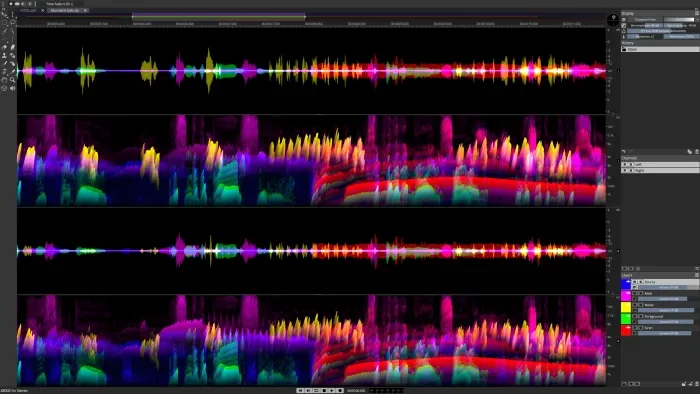
Steinberg's own help documentation for the Unmixing Layers feature states that "by default the layer will be unmixed into Vocals, Piano, Drums, Bass and Other layers" using artificial intelligence, with a per-instrument sensitivity control and an optional non-destructive mode. Five default categories, including piano as its own layer, is a different split from the four-way vocals, drums, bass and other model used by most separators in this batch. The 7.0.20 version history confirms Unmix Stems was already present at the prior 7.0.10 update and gained its sensitivity parameter afterward, dating the feature's maturation, not just its debut, to 2020.
What stays with the musician
SpectraLayers positions Unmix as one tool inside a spectral editor built for sound design, repair and mastering work, not a DJ performance feature, and Steinberg's documentation distinguishes the full Pro version's five-layer Unmix from a simpler "Unmix Vocals" tool in the cheaper Elements edition. A sound designer or mastering engineer still has to decide which of the five layers to act on, how much of the non-destructive rebalancing to apply, and whether the result belongs in a final mix or only served a repair task; the software separates the layers but does not judge their creative use.
Judge it by listening
Steinberg's documents describe the mechanism and its controls but publish no listening-test comparison of Unmix's five layers. This is an editorial suggestion: because Piano is split out as its own category, a useful test is a mix with prominent piano and vocals together, checking whether the two stay cleanly separated or whether harmonic overlap between them leaks across layers, a distinction most four-stem separators in this field do not even attempt.
- Does the Piano layer stay distinct from Vocals on a track where both are harmonically close?
- Does the Sensitivity parameter, added after the feature's initial release, meaningfully change the result on your material?
- Would the Elements edition's simpler Unmix Vocals tool actually serve your task better than the full five-layer Pro version?
SpectraLayers folded AI unmixing into an editor built for repair and sound design, with Steinberg's own version-history documents providing an unusually precise account of when each capability actually arrived, useful discipline for checking any vendor's claimed feature timeline.
Sources & reading trail
Steinberg's own news archive dates the announcement of SpectraLayers Pro 7 and Elements 7 to 2 August 2020, naming AI-optimized unmixing as a headline new feature.
Source published: 2 August 2020 · Retrieved: 16 September 2026
Steinberg's own help documentation states the default Unmix output is five layers, Vocals, Piano, Drums, Bass and Other, and that SpectraLayers Elements ships a simpler Unmix Vocals tool instead.
Source published: Not established · Retrieved: 16 September 2026
Steinberg's own version-history PDF confirms Unmix Stems existed by the 7.0.10 update and added a per-instrument Sensitivity parameter in the 7.0.20 update, both dated 2020.
Source published: 1 September 2020 · Retrieved: 16 September 2026
Documentation, papers and the makers' own records establish the note; the judgment about what stays with the musician is Mix & Meaning editorial analysis. This retrospective draft does not imply the site published on the event date.