The tool moment
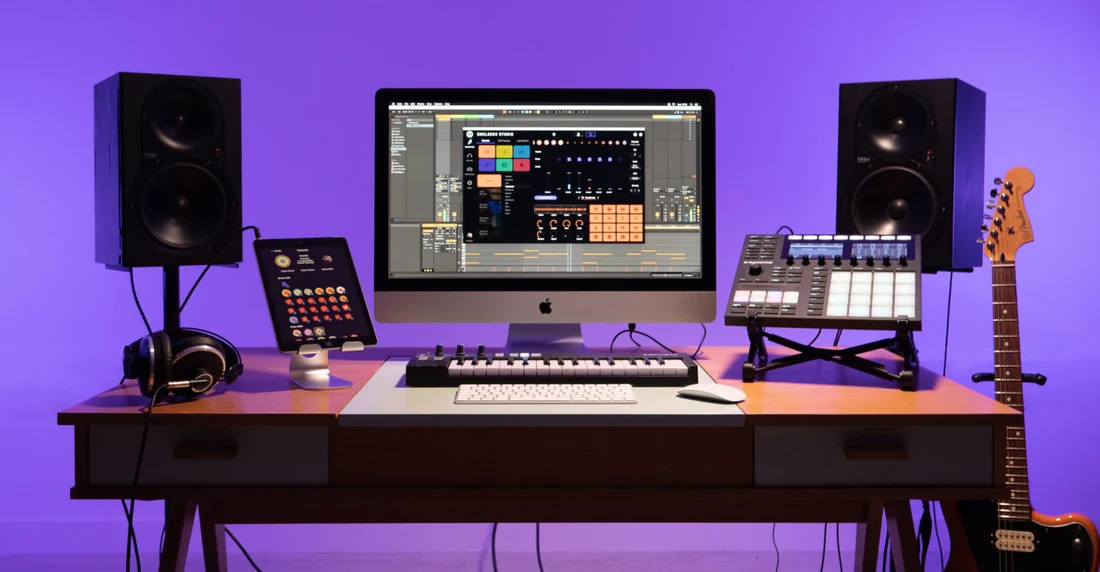
Endlesss was founded in 2017 by musician and technologist Tim Exile, per the company's own About page, with early funding from Innovate UK and investors including Imogen Heap. By the time its homepage was archived in June 2020, the app pitched itself as a way to “make beats, improvise music and jam live with musicians, beat-makers and DJs all over the world,” inviting users to “join the revolutionary live beats movement.” The page describes the mechanic in outline: players “use drums, notes, FX and much more to create music” inside shared jams others can join, explore or start and invite friends into – looping audio passed between participants as the basis of a group composition, rather than a finished track swapped as a file afterward.
What the documents show
Endlesss's own copy is a pitch, not a technical specification, and neither the 2020 homepage nor the current site states a network method – there is no claim of zero-latency streaming, sample-accurate sync, or any named low-latency technique, only the marketing language live and lightning-fast. That absence matters: this entry does not assert real-time, zero-latency collaboration, because Endlesss's own materials do not make that claim. The current homepage, retrieved 16 September 2026, shows the product changed hands since 2020: Endlesss is “now in the care of HabLab London an organisation founded by Imogen Heap,” whose first priority was “to bring the Endlesss core app back online,” implying the venture did not continue without interruption.
What stays with the musician
A shared jam space does not write the part that makes a loop worth keeping. Layering drums, notes or effects over what another participant started still requires the same listening judgment as any group improvisation: what to add, what to leave silent, and when the jam should move on. The platform's invitation to explore community jams and get inspired describes discovery, not composition; turning a promising jam into something worth returning to is still a job for the humans in it.
Judge it by listening
Nothing in Endlesss's materials describes audio fidelity, compression, or the listening experience of a finished jam in technical terms, so any assessment has to come from hearing a jam through. This is editorial guidance beyond the source: listen to a completed jam as you would any collaborative recording, checking whether the parts add up to something coherent, rather than crediting the platform for whatever cohesion the participants found.
- Does a jam built by passing loops between participants hang together as well as one recorded in a shared room?
- What happens to a promising loop if the person who started it never returns to develop it?
- Since the vendor does not specify a latency method, has a reader confirmed how the timing feels before relying on it for a session that matters?
Endlesss's pitch was social and immediate – a jam anyone could join rather than a session booked and filed away – but its own materials leave the technical how and the musical is-it-any-good both to be discovered by the people jamming, not settled by the marketing copy.
Sources & reading trail
Endlesss's own About page states the company was founded in 2017 by musician and technologist Tim Exile, with investors including Imogen Heap.
Source published: Not established · Retrieved: 16 September 2026
Endlesss's own 2020 homepage describes the app as letting musicians jam live with musicians, beat-makers and DJs all over the world using drums, notes, FX and more, without detailing the underlying network latency.
Source published: Not established · Retrieved: 16 September 2026
Current living homepage stating Endlesss is now run by HabLab London, an organisation founded by Imogen Heap, after being brought back online.
Source published: Not established · Retrieved: 16 September 2026
Documentation, papers and the makers' own records establish the note; the judgment about what stays with the musician is Mix & Meaning editorial analysis. This retrospective draft does not imply the site published on the event date.