The tool moment
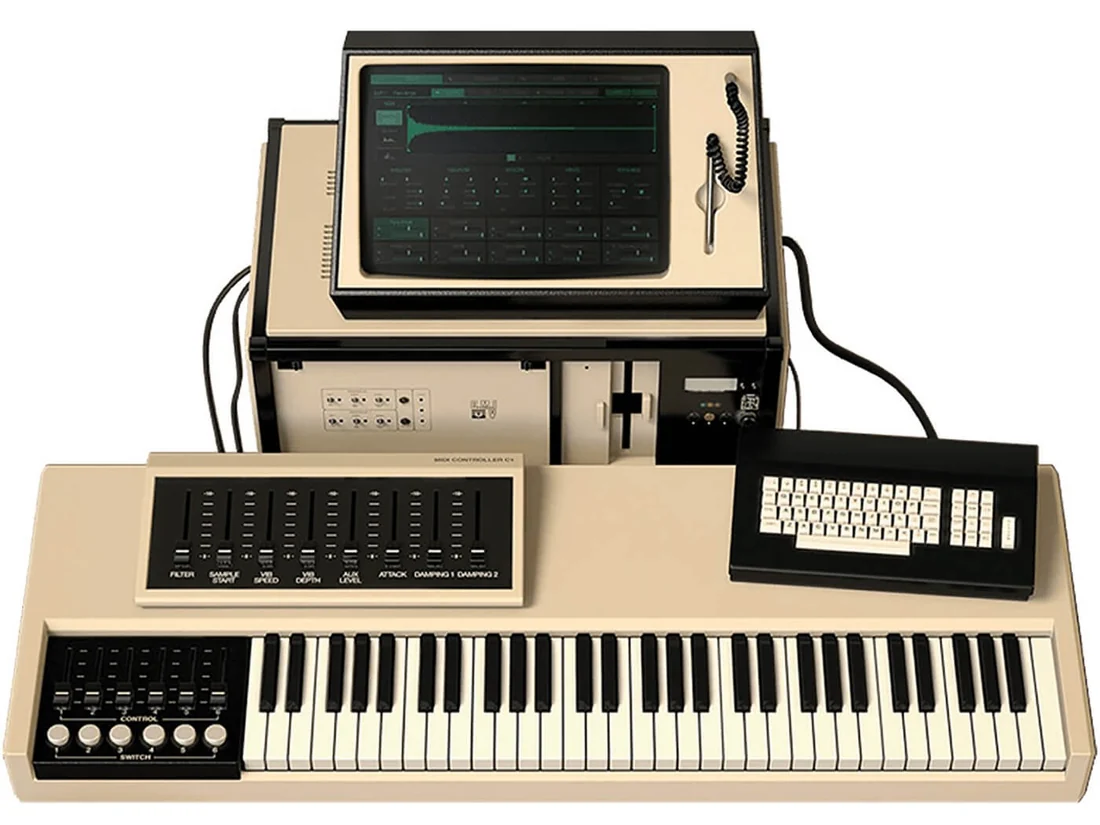
Two Sydney collaborators, Peter Vogel and Kim Ryrie, set out in the mid-1970s to build a better synthesizer and ended up building something else. The company's own history page, now maintained by Vogel's successor company, states that after four years of work they had the first working prototype of the Fairlight Computer Musical Instrument, developed with engineer Tony Furse. The 1979 CMI let a musician record a sound and play it back at different pitches from a keyboard, turning a recording into a playable instrument rather than a fixed tape loop. The page states over 300 units sold worldwide, priced between $50,000 and $100,000.
What the documents show
The successor company's own about page states that Fairlight Instruments turned the music industry on its head by developing the first commercial instrument based on sound sampling — a claim made by the company that now holds the Fairlight name. The history page separately states that the 1979 model CMI used eight-bit audio, and names recordings it says featured the instrument, including Kate Bush's Never for Ever and Stevie Wonder's Happy Birthday, both dated 1980. Those attributions come from the manufacturer's own retrospective, and should be read as the company's account of its own machine's use.
What stays with the musician
Sampling a sound is not the same as deciding what to do with it. The CMI could capture a recording, but a musician still had to choose which sound was worth capturing, where on the keyboard it made sense, and how it sat against everything else in an arrangement. None of the cited material describes the CMI making compositional choices; it describes a capture-and-playback mechanism a musician operated. The instrument also could not tell a musician whether a source recording was theirs to use — a clearance question sampling technology raised from its earliest commercial machine onward, and one that remains a musician's responsibility today.
Judge it by listening
The CMI's eight-bit sampling, described in the manufacturer's own account, is audibly grainy by later standards, and that grain is part of what listeners associate with early-1980s sampled records. A useful exercise is comparing an original CMI-era recording against a modern high-resolution resampling of similar material: the difference is not subtle, and it demonstrates that 'sampled' does not mean 'sounds like the original.' This is an editorial suggestion, not a documented test from either source. Judging a modern sample-based instrument against the CMI's own limitations keeps the comparison honest about what each generation of hardware could actually capture.
- Is a sampled sound being used for what it is, or for how its specific capture technology colors it?
- Has anyone confirmed the source recording behind a sample was cleared for this use?
- Would this sound hold up described accurately, rather than by the vintage-gear name attached to it?
The Fairlight CMI's own successor company is the primary source for its release date and specifications, which is worth remembering: a manufacturer's history page is also a marketing document, and its claims about who used the machine deserve the same scrutiny as any other company's origin story.
Sources & reading trail
Successor company's history page states the CMI's development timeline, 1979 eight-bit sampling, unit sales, and named recordings.
Source published: Not established · Retrieved: 16 September 2026
States Fairlight developed 'the first commercial instrument based on sound sampling.'
Source published: Not established · Retrieved: 16 September 2026
Documentation, papers and the makers' own records establish the note; the judgment about what stays with the musician is Mix & Meaning editorial analysis. This retrospective draft does not imply the site published on the event date.