The tool moment
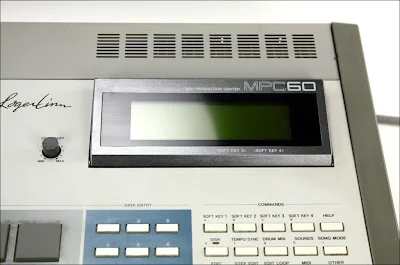
Roger Linn's own FAQ page describes flying to Tokyo to design a sampling drum machine and MIDI sequencer with Akai, developed under the code name BigDrum. Linn writes that he handled the overall functional design and LCD contents, engineer Alan Trimble wrote the software, David Cockerell designed the sound chip in London, and Akai built the circuit boards and mechanical design. Linn states the MPC60 was introduced in 1988 at the NAMM show at a US price of $5000 for 13 seconds of mono sampling time, expandable to 26 seconds, using 12-bit sampling across 16 voices. That fusion — a sampler and sequencer sharing one workflow — is what later beat-making software still models.
What the documents show
Linn's account is a first-person recollection by the machine's co-designer, published decades later, so its dates and prices are a participant's memory rather than a contemporaneous press record, though the specific figures — a $5,000 launch price later cut to $3,500 — read as detail a designer would recall accurately. The MPC60 operator's manual, credited to Linn, documents the swing feature directly: it is described as a variation of timing correction, where a setting of 50% gives perfectly even timing with no swing effect. That is a specification, not a claim about how any particular musician used it.
What stays with the musician
Timing correction and swing only ever adjust notes a musician already played; the manual describes a percentage-based nudge toward a subdivision, not a decision about what the beat should be. A producer still chooses the swing percentage, which steps get accented, and which samples load onto which pad. Linn's own account of an early NAMM conversation is telling: when a customer asked whether memory could be expanded beyond 26 seconds to sample loops from existing recordings, Linn recalls not seeing why anyone would want to — a reminder that even the designer did not anticipate every use a musician would find.
Judge it by listening
Because the manual defines swing as a specific percentage moving notes toward or away from strict subdivisions, a listener can audit a groove by ear against that definition: does a pattern's push-and-pull sit close to even, at 50%, or closer to a triplet feel, and does that match the arrangement's needs. This is a documented parameter, not a vague 'feel' — a rare case where a listening judgment can be checked against a written specification. Whether a swing setting actually serves a track is still a musical judgment the manual does not make.
- What swing percentage is actually driving this groove, and was it chosen deliberately or left at a default?
- Which parts of this beat came from a factory sound versus a musician's own recorded sample?
- Whose recollection is this history built on, and does a second account exist to check it against?
The MPC60's story is unusually well documented by its own co-designer, which is a strength and a limit at once: Linn's account is detailed and specific, but it is still one person's memory of a machine two companies built together.
Sources & reading trail
Roger Linn's own account of designing the MPC60 with Akai, its 1988 NAMM debut, price, and sampling specifications.
Source published: Not established · Retrieved: 16 September 2026
Documents the Swing% timing-correction feature and its effect on note placement.
Source published: Not established · Retrieved: 16 September 2026
Documentation, papers and the makers' own records establish the note; the judgment about what stays with the musician is Mix & Meaning editorial analysis. This retrospective draft does not imply the site published on the event date.