The tool moment
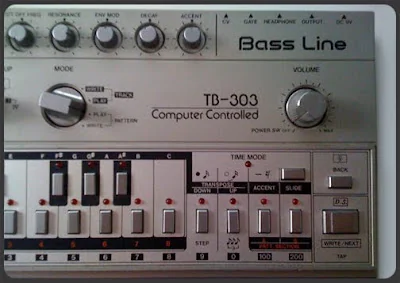
Roland released the TB303 Programmable Bass Line, later known as the TB-303, in 1981, alongside a companion drum machine, the TR606 Drumatix. Sound on Sound's history of Roland, written by Gordon Reid, states the pair was “initially marketed as a computerised bass machine” and, together with the TR606, “intended for use as replacements for a bass guitarist and drummer, tasks at which they were singularly unsuccessful.” The idea was a self-contained rhythm section a guitarist could switch on and play against alone, not an instrument meant to define a new genre of dance music.
What the documents show
The Sound on Sound account, published in December 2004, states the TB-303's production run lasted under two years and that unsold units were “sold off cheaply” before the instrument was “adopted for the first acid house tracks later in the '80s.” Roland's own current material does not preserve that story. The company's official history page, retrieved 16 September 2026, lists 1981 as the year of the Jupiter-8 synthesizer and omits the TB-303 entirely. Roland's current TB-03 reissue page markets the sound purely through its dance-music identity, with no reference to the original bass-replacement pitch or the commercial failure that preceded its later use.
What stays with the musician
A modern producer reaching for a 303-style bassline still has to decide what role that sound plays in an arrangement: a lead hook, a rhythmic bed under other elements, or a texture pushed toward distortion. None of the documents describe the instrument's acid house use as an intended design outcome; that use was found by musicians after the product's marketed purpose had already failed commercially. How far to push resonance and accent into something musically legible, rather than merely loud, remains an arrangement decision no reissue's circuit modeling makes automatically.
Judge it by listening
A reader can compare a reissue like the TB-03 against period recordings that used an original unit, listening for whether the resonant filter sweep and accent behavior the documents describe as distinctive carry the same character across different patches and mix contexts. That comparison is an editorial exercise a reader can run for themselves; none of the sources cited here include a controlled listening test comparing original hardware to any reissue.
- What was this sound originally built to replace, and does that history change how it gets used today?
- Is the resonant, distorted character serving as a hook, a texture, or filler in this arrangement?
- Would a period recording and a modern reissue actually be distinguishable in this specific mix?
The instrument's own manufacturer no longer tells the failure story on its current pages; the trade-press history that does is the more complete record, and it is worth checking before repeating a tidy origin story that the product's first years did not actually live up to.
Sources & reading trail
Sound on Sound's history of Roland states the TB-303 was launched in 1981, marketed as a computerised bass machine meant to replace a bass guitarist, and became a commercial failure before later adoption in acid house.
Source published: 1 December 2004 · Retrieved: 16 September 2026
Roland's own official history page lists only the Jupiter-8 for 1981 and omits the TB-303 entirely, showing the company's current material does not repeat the practice-tool/failure narrative.
Source published: Not established · Retrieved: 16 September 2026
Roland's current TB-03 reissue page describes the original TB-303's sound and interface but frames it entirely through its later dance-music identity.
Source published: Not established · Retrieved: 16 September 2026
Documentation, papers and the makers' own records establish the note; the judgment about what stays with the musician is Mix & Meaning editorial analysis. This retrospective draft does not imply the site published on the event date.