The tool moment
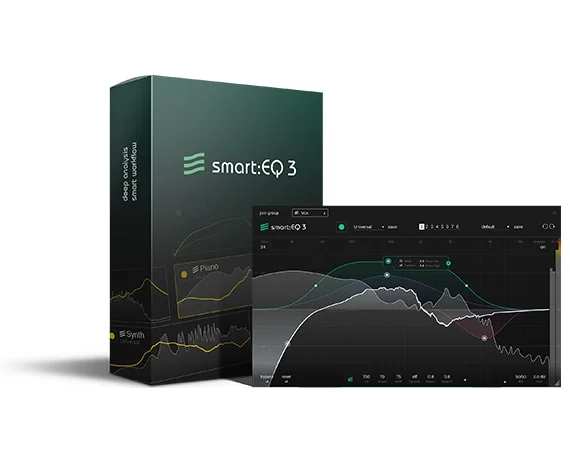
On 14 November 2016, the Austrian company sonible introduced smart:EQ+, an eight-band equalizer plug-in in which four of the bands carried what the company called a smart function. Instead of a musician setting gain, frequency, and Q by hand, those bands read the incoming signal and adjusted the curve automatically, aiming to correct what the announcement calls spectral imbalance. This arrived in the same period as iZotope's Track Assistant and a broader wave of vendors building automatic analysis into standard mixing tools, but sonible's approach placed the automation inside the equalizer curve itself rather than around a whole channel strip.
What the documents show
sonible's own launch post states that the smart bands 'adjust the equalizer curve fully automatically to the audio material at hand,' and that the plug-in includes a dedicated voice mode for vocal material. An archived snapshot of the product's own page from September 2017 adds that filter curves come from what sonible brands its smart:engine, which it says identifies spectral dysbalance and proposes a correction within seconds, with a smoothing control to soften how aggressively the bands react. These are the vendor's own descriptions of its method; sonible does not publish an independent study comparing the automated curve to a mastering engineer's manual equalization.
What stays with the musician
The smoothing and per-band controls described on sonible's pages exist because the automated curve is adjustable, not fixed: a user can soften the response or bypass individual bands, and the plug-in's four non-smart bands remain conventional, manually set filters. Deciding which frequency ranges should even be handed to the smart function, and whether the plug-in's idea of balance matches the track's genre or a vocalist's intended character, is left to the person running the session. A curve built from spectral analysis cannot know that a vocal's rasp is the performance, not a flaw.
Judge it by listening
sonible's own materials do not publish a listening-test methodology, so any comparison here is editorial. A practical check is to solo the track before and after the smart bands engage and listen specifically at the frequency ranges the plug-in altered, rather than judging the change only in the context of a full mix where a subtle move is easy to miss. Because the algorithm reacts to whatever material it is given, running it on a rough take versus a finished take is a useful way to hear how much the correction depends on the source rather than a single fixed target.
- Which bands did the smart function touch, and does that match where the track actually sounds unbalanced?
- Does the automated curve still hold up once the track sits inside the full mix?
- Would adjusting the smoothing control change the outcome enough to prefer a different setting?
sonible's documents describe an automated proposal, adjustable after the fact, not a substitute for deciding what a track should sound like. The gap between a vendor's account of what its algorithm does and independent verification of how well it does it is worth keeping in view whenever the word smart names a plug-in.
Sources & reading trail
sonible's own launch announcement naming the date, the eight-band design, and the smart-band automation.
Source published: 14 November 2016 · Retrieved: 16 September 2026
Product page describing the smart:engine analysis method, speech mode, and adjustable smoothing control.
Source published: Not established · Retrieved: 16 September 2026
Documentation, papers and the makers' own records establish the note; the judgment about what stays with the musician is Mix & Meaning editorial analysis. This retrospective draft does not imply the site published on the event date.