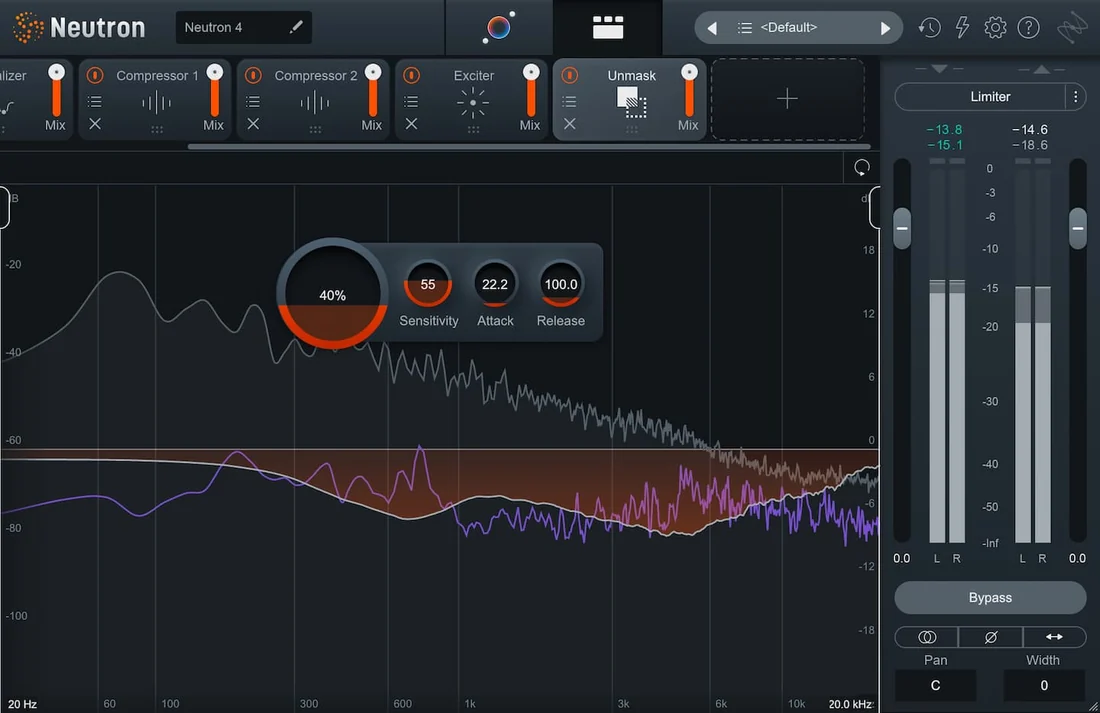
The tool moment
In September 2016, iZotope announced Neutron, a new mixing plug-in that shipped on 5 October 2016 with a feature the company called Track Assistant. According to the company's own launch announcement, Track Assistant listens to an incoming track for a few seconds, detects the kind of instrument on it, and reorders Neutron's five processing modules around what it infers the material needs. Before Track Assistant, a mixer working inside Neutron set EQ curves, compressor thresholds, and crossover points from scratch on every channel. The feature's stated purpose, as described on the product's own 2017 page, was to compress that setup work into an analyzed starting point rather than to finish the mix.
What the documents show
iZotope's own tutorial on using Track Assistant explains the process: the interface greys out for four to ten seconds while it listens, then EQ, compressor, and exciter modules populate with settings, some bands static and some dynamic, from a single pass of analysis. The tutorial documents three intensity settings, Subtle, Medium, and Aggressive, chosen before running the assistant. None of this is independently measured; it is the vendor's own account of its feature, published to help customers use the product, not a study of how the suggestions perform against a trained engineer's ear. The launch page calls Track Assistant 'an industry first,' a competitive claim documenting the company's own positioning rather than a verified comparison.
What stays with the musician
Every iZotope document consulted here frames the output as a starting point, not a finished setting. The tutorial states plainly that a user can retune any band, switch a mode on or off, or ignore a module's suggestion entirely. The assistant works independently on each track and does not hear the whole mix, so how a vocal should sit against a guitar remains a decision made by the person listening across the session. Track Assistant also cannot know the arrangement's intent, so accepting its EQ curve without listening past it can quietly overwrite a choice the plug-in was never told about, such as a deliberately dry, upfront vocal.
Judge it by listening
Because the claim is about a faster starting point, not a superior sound, a fair check, editorial rather than one iZotope publishes, is comparative: solo the track before running the assistant, listen again after, and note whether the changes serve this specific mix or a generic version of the instrument's spectral shape.
- Which parameters did Track Assistant leave untouched, and does that match what the track needed?
- Does the suggested EQ curve still make sense once the full arrangement, not the soloed track, is playing?
- Would a different intensity setting change the outcome enough to change the mix decision?
Track Assistant's documented contribution is time saved on an initial setup a mixer would otherwise build by hand. What the same documents do not claim is that it replaces the judgment of whether that setup actually serves the song.
Sources & reading trail
Company's own launch announcement giving the 5 October 2016 availability date and describing Track Assistant's purpose.
Source published: 29 September 2016 · Retrieved: 16 September 2026
Product page describing Track Assistant's automatic instrument detection and EQ-node placement as a mixing starting point.
Source published: Not established · Retrieved: 16 September 2026
iZotope's own tutorial detailing the listening/analysis process, intensity settings, and that all settings remain user-adjustable.
Source published: Not established · Retrieved: 16 September 2026
Documentation, papers and the makers' own records establish the note; the judgment about what stays with the musician is Mix & Meaning editorial analysis. This retrospective draft does not imply the site published on the event date.