The tool moment
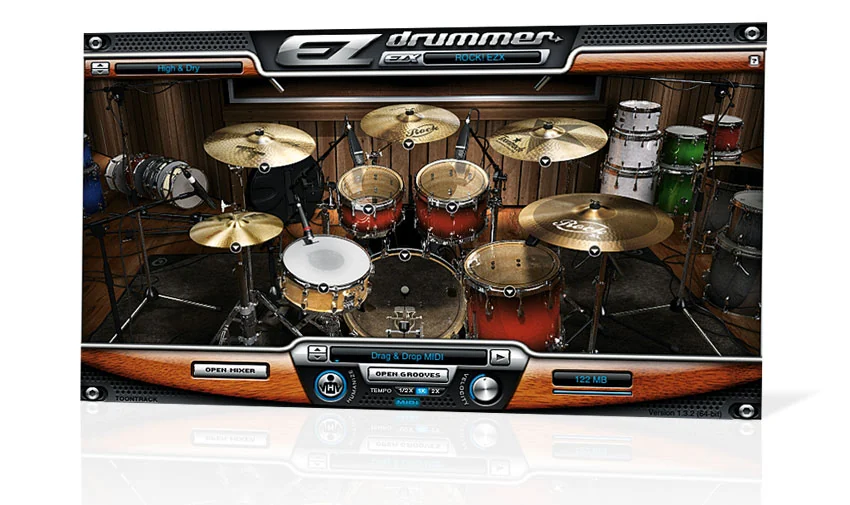
Toontrack released EZdrummer in 2006, pairing sampled acoustic drum kits with a large, drag-and-drop MIDI groove library, years before generative or AI-branded production tools entered the market. The company's own product page describes it as “a multi-microphone drum sampler designed for musicians and producers in need of a compact, affordable, easy to handle plug-in without compromising sound quality or control,” built around an internal mixer and a library of thousands of MIDI drum patterns a user could audition and drag straight into a track.
What the documents show
Toontrack's own operation manual states the drums were recorded and produced at Avatar Studios in New York on 1 October 2005, and walks through finding a groove by choosing “the overall style,” a feel such as “POP/ROCK Straight” in 4/4 time, then one of several playing variations. A contemporaneous product review hosted on Toontrack's own site references further sound-expansion packs due later that year, corroborating the product's presence on the market in 2006. All three documents are Toontrack's own or Toontrack-hosted descriptions of the original release; they describe the mechanism and its recording credits, not an independent judgment of how the sampled kit compares to a live session drummer.
What stays with the musician
EZdrummer's library speeds up finding a workable groove, but it does not choose which style or feel actually fits a song, when a fill belongs, or how the mixed drum sound should sit against the rest of an arrangement. A musician still edits or replaces the chosen MIDI pattern to match the song's structure, and decides whether the built-in mix, described in the manual as already balanced so a user need not adjust levels between drums, still serves a specific production once other instruments are added.
Judge it by listening
Toontrack's documents describe the library's organization and the recording's pedigree; they make no claim about how a specific chosen groove will sit in a finished mix. A reader can listen for whether the selected pattern still supports a song's dynamics across its verses and choruses, or whether repeated use of the same library groove starts to sound like a preset rather than a composed part written for that song. This is an editorial listening check, not a method Toontrack documents.
- Does the chosen groove change enough across the song, or does it repeat past the point of interest?
- Would a listener familiar with the library recognize the pattern as a preset rather than a composed part?
- Does the kit's already-mixed balance still work once the rest of the arrangement is in place?
EZdrummer's 2006 pitch, an affordable, already-mixed kit paired with a large auditionable groove library, set a template that later virtual drummers, generative or not, would keep returning to.
Sources & reading trail
Toontrack's own product page for the original dfh EZdrummer describes the multi-microphone drum sampler, its drag-and-drop MIDI groove library, and its internal mixer.
Source published: Not established · Retrieved: 16 September 2026
Toontrack's own operation manual states the drums were recorded at Avatar Studios New York on 1 October 2005 and describes choosing a MIDI groove by style, feel and playing variation.
Source published: Not established · Retrieved: 16 September 2026
A contemporaneous review hosted on Toontrack's own site references further EZX sound-expansion packs due later in the year, corroborating the product's availability in 2006.
Source published: Not established · Retrieved: 16 September 2026
Documentation, papers and the makers' own records establish the note; the judgment about what stays with the musician is Mix & Meaning editorial analysis. This retrospective draft does not imply the site published on the event date.