Know what travels with the audio
Keep the source, the person and the destination in view. These guides organize the questions; they do not substitute for advice on a particular contract or jurisdiction.
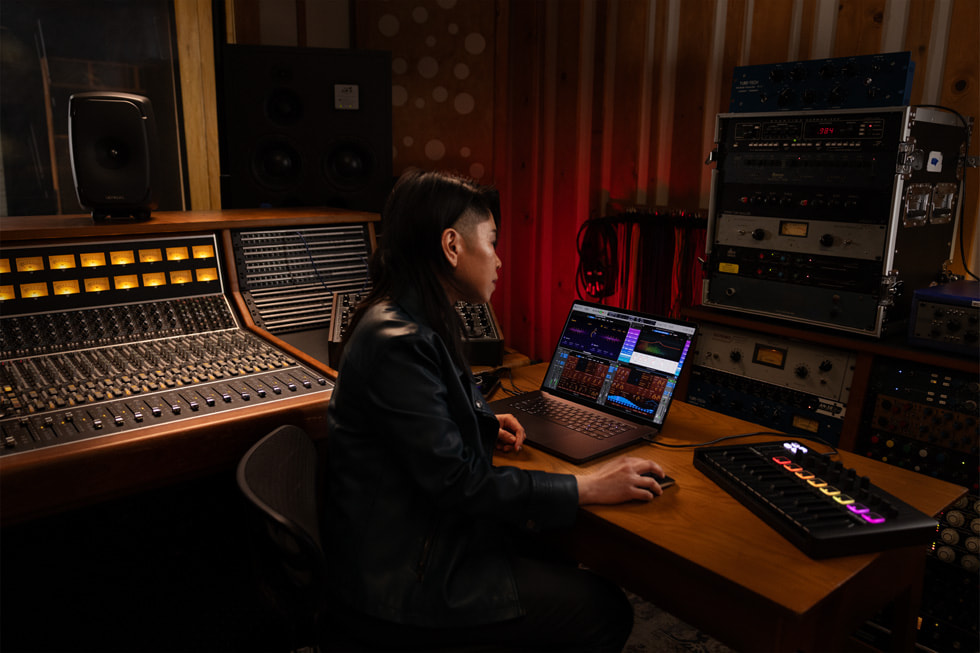
A recording-studio photograph from Apple’s May 2024 Logic Pro announcement.
Apple · Source ↗Contextual product photography; no interview, identity or endorsement is inferred.The listening question
What needs permission, credit or disclosure?
The sequence below is an editorial route, not a prerequisite list. Begin where your project needs attention.
Keep a session checklist ↗- 01
Rights
Audio-to-audio starts with permission, not possibility.
A transformation keeps a relationship to its input. Document that relationship before release.
- 02
Rights
A consent-first voice session.
Treat a voice model like an ongoing permission relationship, with revocation and scope written down.
- 03
Collaboration
Collaborate without sharing a voice model
Send approved renders and performance directions, not reusable identity access, when a project does not require a collaborator to hold a voice model.
- 04
Songwriting
Map authorship while the song is still changing.
A session method for lyrics, melody, harmony, arrangement and generated material.
- 05
Rights
Commercial use is not the same as copyright.
Four questions to ask when a license page says an output can be monetized.
- 06
Ethics
Describe style without borrowing a living person’s identity.
Translate references into musical properties, histories and permissions.
- 07
Ethics
Disclose the process without making the tool the whole story.
A useful note tells listeners what changed, where identity is synthetic and what remains uncertain.
- 08
Creativity
Protect collective difference, one arrangement at a time.
Convenient suggestions can broaden an individual draft while narrowing what a group of creators produces.