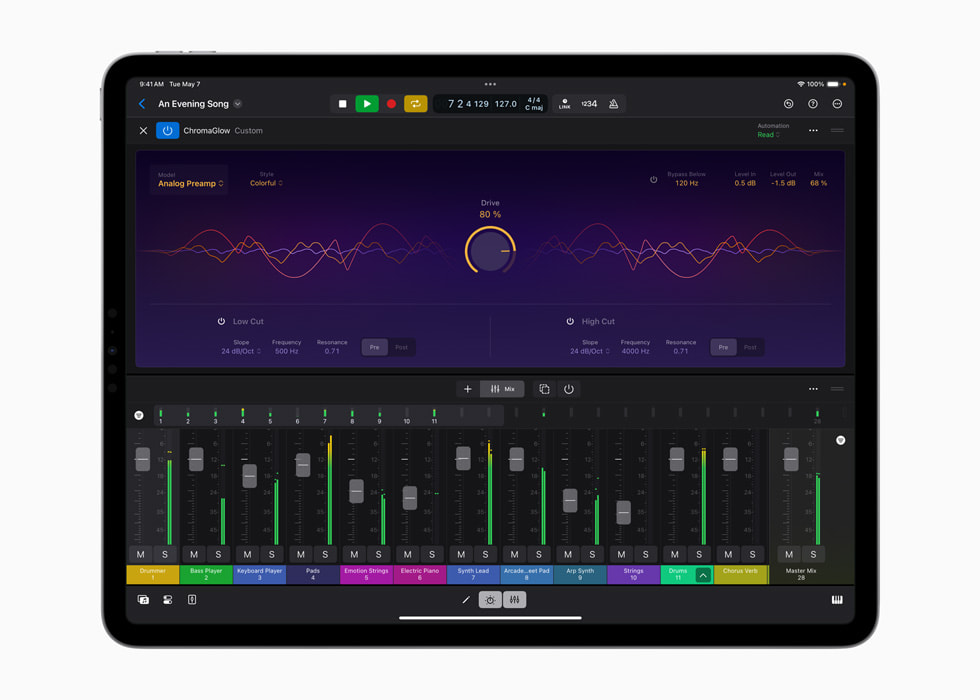
ChromaGlow in Apple’s 2024 announcement. A processing interface gives a setting somewhere to live; comparison gives it a reason to stay.
Apple · Source ↗Illustrates processing controls, not automated mastering or a listening-test result.Do not average away the trade-offs
A single star rating can hide why a tool fits one practice and fails another. Score separate dimensions and publish the evidence behind each judgment.
Musical dimensions
Listen for structure, continuity, timing, timbre, intelligibility where relevant and the relationship between foreground and background. Describe artifacts concretely. Avoid claiming objective quality from preference or a tiny sample.
Working dimensions
Test direction control, repeatability, section editing, export, project recall, latency and accessibility. Record browser, version, plan, date and whether a feature was available to the reviewed account.
Rights and evidence dimensions
Review input terms, output license, training disclosure, voice consent, attribution, retention, commercial scope and destination restrictions. “No evidence found” should score differently from a documented prohibition.
Publish limits with the result
- Number and length of examples.
- Whether listening was blind or level-matched.
- Reviewer’s task and genre context.
- Features not tested.
- Dynamic claims that need rechecking.
A reproducible review helps readers repeat the decision in their own context. It does not pretend that one session settles the product.
Best for / avoid when / evidence checked / unknowns / next review date.
Sources & reading trail
- Google Lyria 3.5 model card — primary documentation or research used for the bounded claims above.
- MusicGen model card — primary documentation or research used for the bounded claims above.
Reviewed for this local compilation on 15 September 2026. Product terms and platform policies can change; recheck them for a release. This article is editorial guidance, not legal advice or a claim of independent product testing.